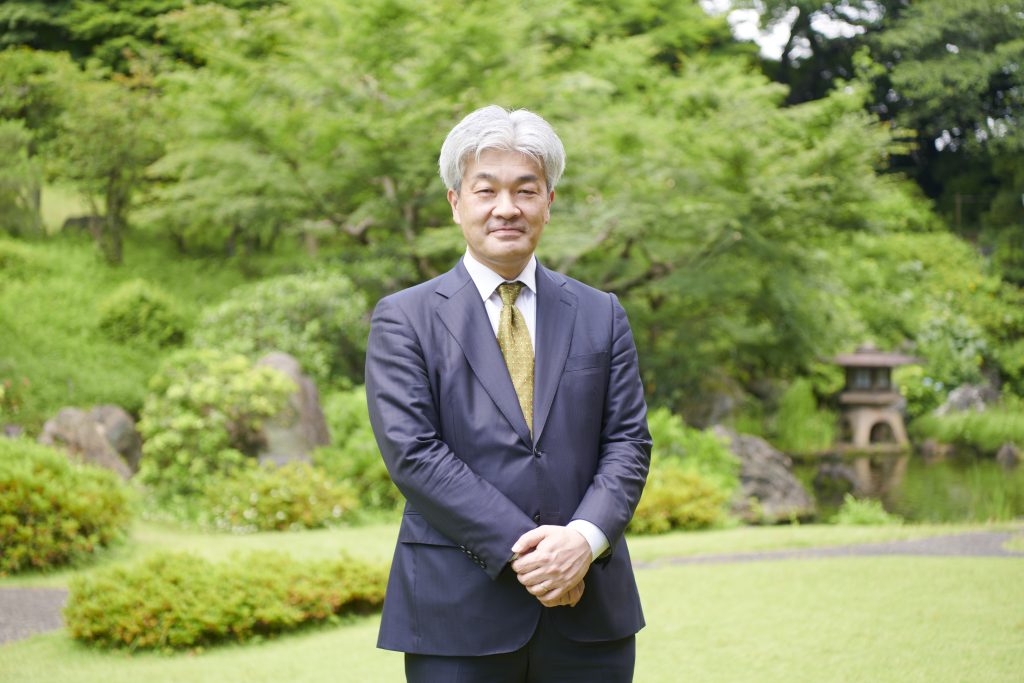
Japan’s leaders are interested in importing Canadian oil to help the country strengthen its economic security, building on what’s already been done with natural gas, says Dr. Kazuto Suzuki, director of the Tokyo-based Institute of Geoeconomics.
“The gas is already diversified compared to the crude oil, so oil is the important part,” said Suzuki, a professor at the University of Tokyo, at a recent Calgary event hosted by the Canadian Global Affairs Institute.
Diversifying Japan’s oil supply
Japan relies on imports for nearly 85 per cent of the energy it consumes, according to the country’s Ministry of Economy, Trade and Industry (METI).
Natural gas, imported as LNG, comes from a variety of suppliers including Australia, Malaysia, the United States, Russia, Qatar and now Canada, where Mitsubishi is a joint venture partner in the LNG Canada project.
Unlike natural gas, Japan's oil imports come almost entirely from the Middle East, where conflict is disrupting shipments through the Strait of Hormuz and straining the country's economy.
This August, Japan received its first tanker of Canadian oil in over a year, which Prime Minister Sanae Takaichi called “a matter of great joy” and “profoundly significant" from the perspective of ensuring Japan's energy security.
A secure route to Asian markets
Unlike oil from the Middle East, Canadian oil shipped from the West Coast can reach Asian markets without passing through risky shipping routes, Atlantic Council researchers wrote in October.
“Canada has an exit for energy exports on the West Coast, and there are no choke points between Japan and Canada,” Suzuki said.
“This is the safest route between the resource countries and the imports of resources to Japan.”
The shipment of heavy oil from Cold Lake, Alberta arrived in Japan shortly before Takaichi announced emergency measures to secure crude oil and petroleum products from sources that do not rely on the Strait of Hormuz.
Japan aims to serve as a hub connecting oil-producing countries with "like-minded" partners across Asia, she said.
The proposed Pacific Link pipeline could further expand Canada's access to Asian markets.
The project would transport one million barrels of oil per day to the West Coast for export, with early construction expected to start as early as October 2027.
Making Canadian oil work for Japan
While the Cold Lake shipment was enthusiastically received, many Japanese refineries are designed to process lighter crude oil rather than the heavier oil (diluted bitumen) that makes up most of Alberta’s exports.
But that doesn’t have to be a barrier, said Richard Masson, former CEO of the Alberta Petroleum Marketing Commission.
“There are things that we can do already that would benefit Japan because the refinery system is designed for light oil,” he said.
In the near term, Masson said Canada could export synthetic crude oil — a lighter oil produced by upgrading bitumen and heavy crude — through the Trans Mountain pipeline system.
Longer-term, he said Japanese refineries could be adjusted to process heavier oil.
“Like many refineries have done already in North America, when you have an available supply of diluted bitumen and you see that it's reliable and economic, [you can] put in a coker or some other conversion capacity,” Masson said.
“That doesn't increase your total refined product output, but it diversifies your supply and lowers its cost. That's what all the U.S. Midwest refineries did one by one, and that's exactly what could happen with Japanese refineries.”
Upgrading East Asian refineries
The Atlantic Council identified upgrading East Asian refineries with equipment to process heavier crude as the most commercially viable option for expanding Canadian oil exports to Asia.
Discussions about investing in refineries have restarted in Japan, Suzuki said.
“Even though current refineries are not suited for the heavier oil, I think there are opportunities that the Japanese companies are willing to invest in,” he said.
Masson sees significant long-term potential for Canadian oil exports to Japan.
“Canada is an obvious supplier to Japan for many decades to come,” he said.
The unaltered reproduction of this content is free of charge with attribution to the Alberta Energy Centre.


