From natural gas and oil to LNG and carbon capture, a new wave of major energy projects is taking shape in Canada.
Pipeline developers say they are prioritizing Canadian contractors and steel suppliers, helping spread the economic benefits across the country.
“If executed well, these projects can create significant opportunities for Canadian jobs and domestic supply chains, including through sourcing steel, equipment and labour from Canadian manufacturers, suppliers and contractors,” said Bryan Detchou, senior director of natural resources, environment and sustainability with the Canadian Chamber of Commerce.
“We know Canada has what the world needs, and now we must do more to connect our resources with global markets.”
Canada is on the verge of an oil and gas production upswing that could drive more than $200 billion in capital spending through 2040, according to a recent RBC report.
The economic impacts would extend far beyond Alberta, said RBC energy policy lead Shaz Merwat.
“Demand would reach supply chains nationwide, from Ontario steel plate to Saskatchewan line pipe,” he said.

Canadian steel in major pipeline projects
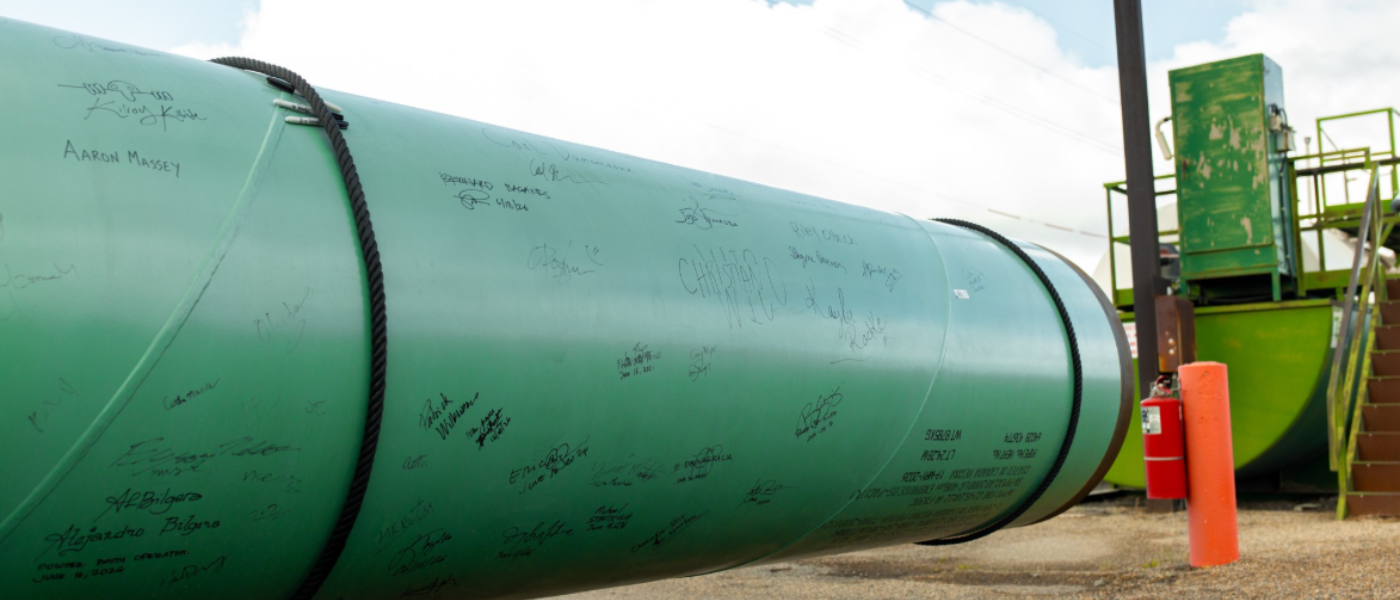
This summer, as dignitaries gathered in Prince George, B.C., to mark construction of Enbridge’s Sunrise natural gas pipeline expansion, the highlight was a section of steel signed by workers who manufactured it at InterPro Pipe and Steel’s facility in Regina, Sask.
“Not only is this $4-billion project part of the $8 billion that Enbridge is building in [B.C.], but there’s some $3 billion of GDP benefit to the country, helping to move our economy forward,” Enbridge CEO Greg Ebel said during the launch.
Slated for completion in 2028, the Sunrise expansion will move more natural gas to customers in B.C., Alberta and the U.S. Pacific Northwest for heating, power generation and industrial use.
“Infrastructure like the Sunrise Expansion Program helps our country realize its goal of becoming a global energy superpower,” Ebel said.
Reaching more global markets requires additional pipeline capacity for both oil and natural gas.
One of the latest projects moving ahead is the expansion of the Coastal GasLink pipeline, which supplies the LNG Canada export facility at Kitimat, B.C.
In September, the export terminal’s owners gave the milestone green light to proceed with Phase 2, meaning more pipeline capacity is also needed.
Coastal GasLink has set a target of using 70 per cent Canadian steel for the expansion, which will add new compressor stations and upgrade facilities along the existing 670-kilometre route.
Local and Indigenous businesses share in the work
The proposed Ksi Lisims LNG project has also awarded major pipeline work to Canadian contractors.
In August, the Nisga’a Nation and Western LNG awarded Surerus Murphy Joint Venture a major construction contract for the Prince Rupert Gas Transmission (PRGT) pipeline.
The deal marked the first of what the partners called a coming “all-Canadian roster” of contractors for land construction.

Eva Clayton, president of the Nisga’a Lisims Government, said the strategy aims to maximize local economic benefits.
"When we build with Canadian companies, and those companies subcontract to local and Indigenous businesses, that means huge benefits stay right here in British Columbia," Clayton said.
Sean Surerus, chairman of Surerus Murphy, said the PRGT project represents an important opportunity for the region.
"This is a critical project for northeastern B.C., for the province and for Canada, one that will help strengthen our economy by creating a truly international export opportunity," he said.
Energy projects support manufacturing across Canada
Canadian steel is also being used in carbon capture and storage projects.
In Alberta, Enhance Energy says it is using Canadian steel for the Origins CCS Hub, which will be Canada’s largest CCS project when it goes into operation early next year.
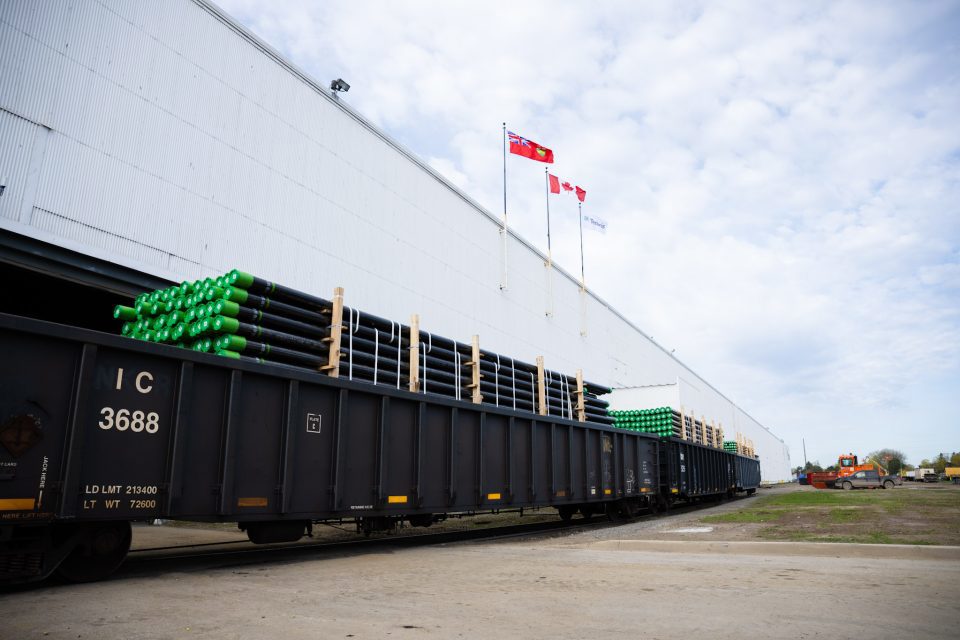
In Ontario, Tenaris has supplied steel products to Western Canada’s oil and gas industry for more than 25 years. Its Sault Ste. Marie operation is Canada’s only facility producing seamless steel pipe for the sector.
In May, the company announced a $306-million expansion, followed in October by production of a new steel grade designed for high-pressure and high-temperature operations such as the Montney play in B.C. and Alberta.
“Major energy infrastructure projects create benefits far beyond construction, supporting Canadian manufacturing, skilled jobs and upstream domestic supply chains needed to bring Canadian energy to market,” said Martin Castro, president of Tenaris in Canada.
The unaltered reproduction of this content is free of charge with attribution to the Alberta Energy Centre.


