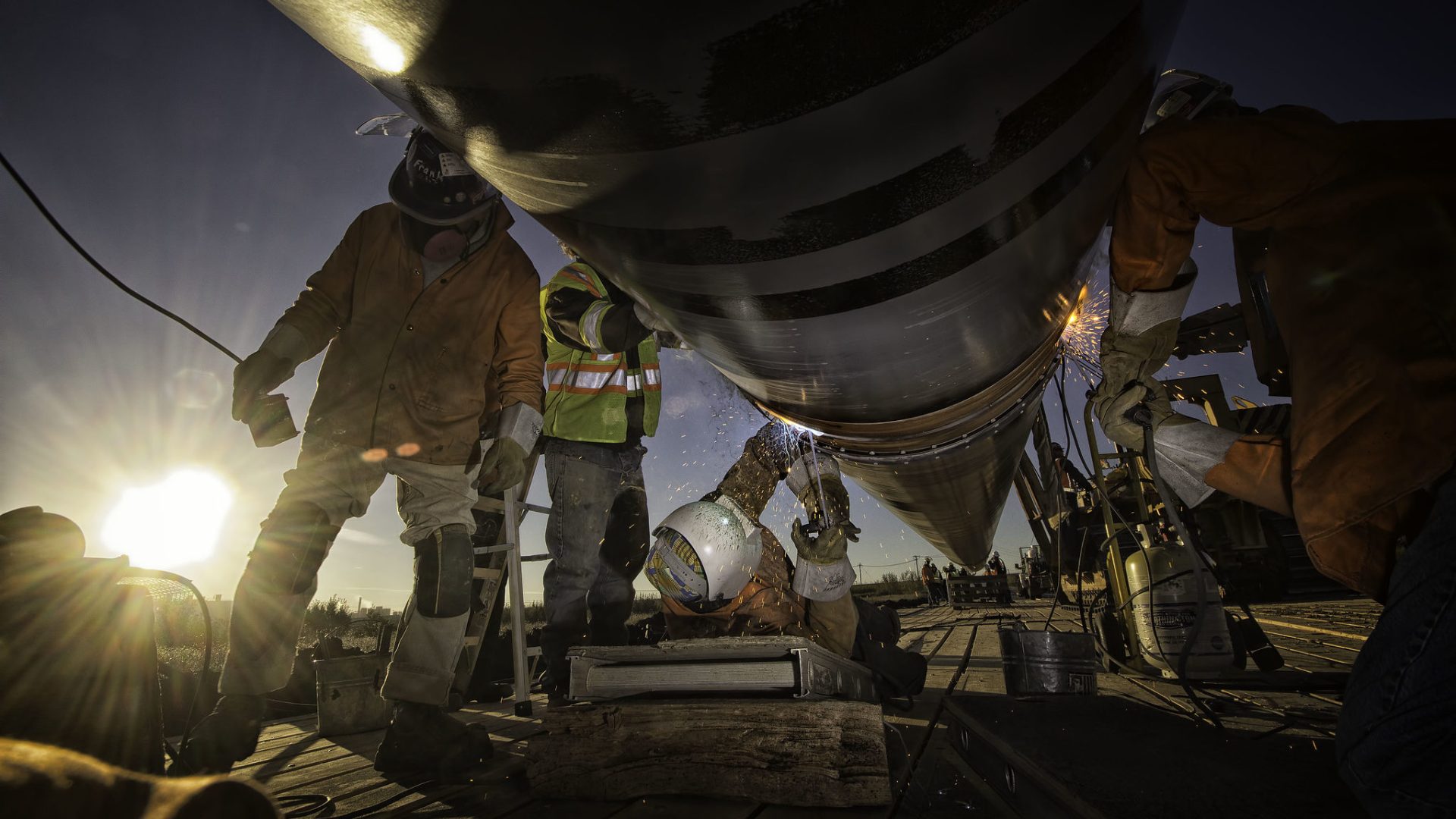
As a lifelong farmer, entrepreneur and community leader, Alanna Hnatiw knows first-hand the crucial role energy plays in a strong and diverse economy.
The mayor of Sturgeon County, a sprawling rural municipality northeast of Edmonton, Hnatiw has spent much of the last decade working to protect its agricultural roots while building new industries that support the jobs and services families and businesses rely on every day.
Hnatiw says there is widespread appreciation among the county’s 20,000 residents for the opportunities afforded by the province’s oil and gas resources. That’s why she joined other leaders in Alberta’s Industrial Heartland region to applaud a major new natural gas pipeline planned for the area.
“Natural gas is integral to all the industrial operations in Sturgeon County and the surrounding area. From fertilizer and plastics to petrochemicals and hydrogen, natural gas is the lynchpin for us into the future,” she said.
Yellowhead Pipeline
Hnatiw is one of more than a dozen community and industry leaders who sent letters of support to the Alberta Utilities Commission (AUC) in 2024 endorsing ATCO Energy Systems’ $2.9-billion Yellowhead Pipeline.
The AUC approved the project in August 2025.
On October 13, 2026, a groundbreaking ceremony with dignitaries marked the official start of construction.
Filling growing demand
The 230-kilometre pipeline from Peers to Fort Saskatchewan will transport about 1.1 billion cubic feet of natural gas per day when operational in late 2027.
For context, Alberta produced about 11 billion cubic feet per day of natural gas in 2024, according to Alberta Energy Regulator data.
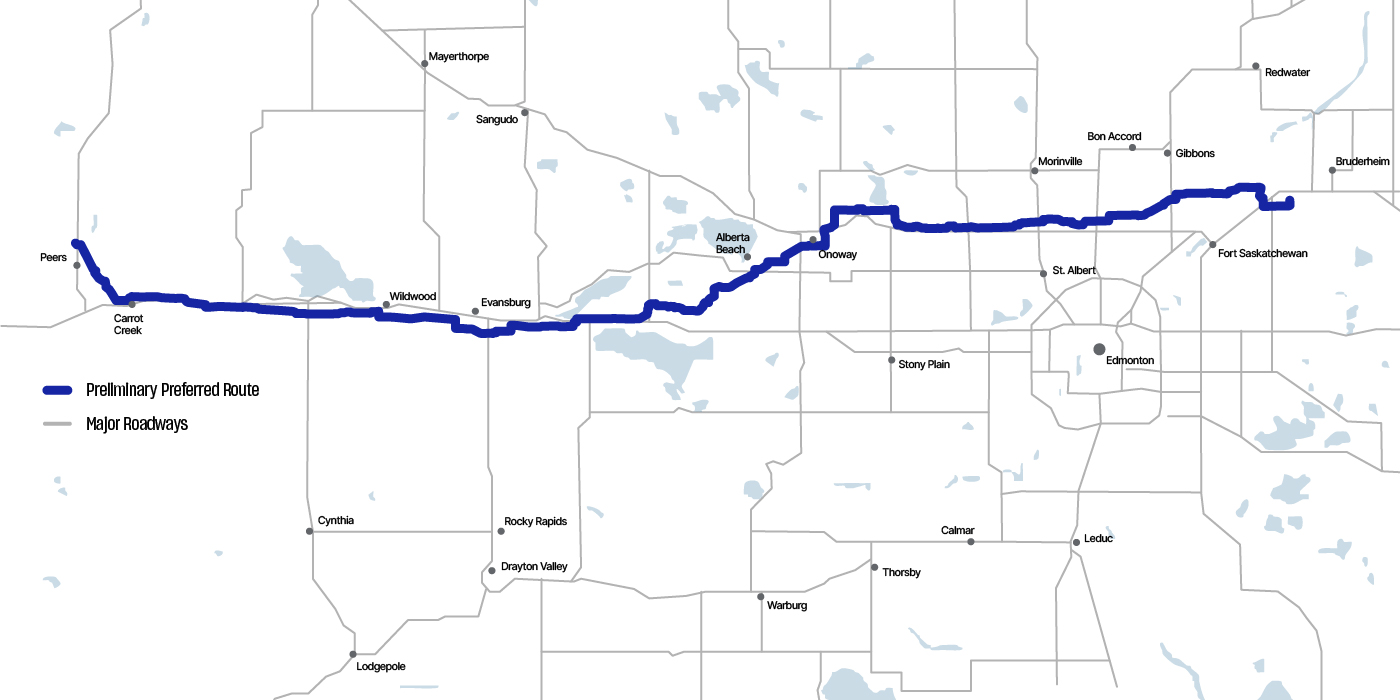
The Yellowhead Pipeline will boost deliveries to the greater Edmonton area as demand continues to grow for power generation, manufacturing, petrochemical processing and residential use.
Industrial customers have reserved a reported 90 per cent of the pipeline’s capacity to meet their future needs.
Prosperity driver
Edmonton Global CEO Malcolm Bruce described the Yellowhead Pipeline as a “visionary” infrastructure project in his letter of support to the AUC.
“[It] will create jobs, enable billions in new investment and drive Alberta’s hydrogen roadmap and natural gas vision and strategy.”
ATCO’s projections show the pipeline will generate substantial economic benefits. The company estimates that during construction, it will support 12,000 jobs and contribute $1.6 billion per year to Alberta’s economy.
Once in operation, the pipeline is expected to support 23,700 jobs per year and add $3.9 billion annually to Alberta’s GDP.
For Sturgeon County, the project also provides much-needed certainty that natural gas will be available for the $30-billion in new industrial investments the region is hoping to attract in the coming years.
Future plans
The municipality is already home to operations including the Sturgeon Refinery and Redwater Nitrogen Facility, which capture CO2 emissions for deep underground storage using the Alberta Carbon Trunk Line.
Hnatiw said future development could include hydrogen production with CCUS, petrochemical processing, power plants and large-scale data centres.
“With our operations running near capacity right now, this new pipeline helps alleviate the uncertainty around gas supplies for industrial developers,” Hnatiw said.
The county’s industrial goals are inextricably tied to ensuring its farming sector continues to flourish, she said.
“Eighty per cent of our land base is agricultural, but it only accounts for one per cent of our budget as far as taxes go, so we need our industrial residents to support our rural way of life,” she said.
“We don’t want people to have to leave our community to make a living. We want a future that is full of opportunity, and one that is also sustainable for the families that produce our food, our fuel, and all the other value-added products we can provide.”
The unaltered reproduction of this content is free of charge with attribution to the Alberta Energy Centre.


